

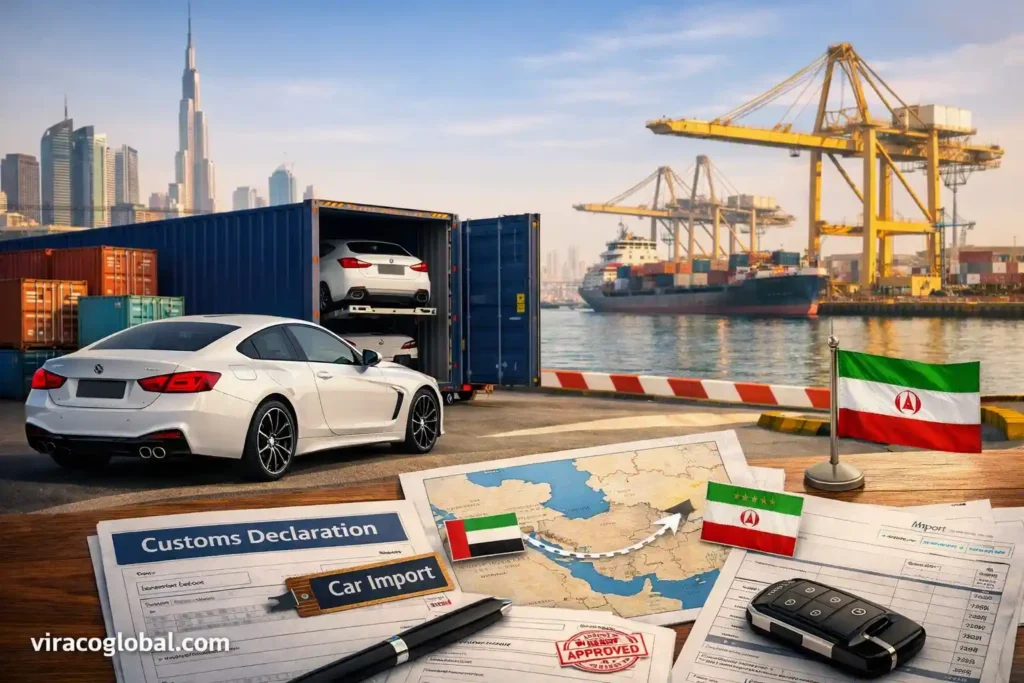
The UAE, particularly Dubai, is one of the major regional markets for sourcing foreign vehicles. A wide selection of new and used cars, established export infrastructure, and access to international automotive brands make the UAE an important sourcing point for buyers looking to bring vehicles into Iran.
However, importing a car from the UAE to Iran is more than simply buying a vehicle in Dubai and shipping it to Iran. The vehicle must first be checked for eligibility under the applicable Iranian import route. Registration, technical requirements, customs procedures, duties, and vehicle registration must then be completed before the car can receive an Iranian national plate.
The exact requirements can vary depending on the type of importer, the vehicle’s condition, model year, and the specific import scheme being used. Therefore, checking the current regulations before purchasing the vehicle is one of the most important steps in the entire process.
Why Is the UAE an Important Source for Car Imports to Iran?
Dubai and other UAE markets offer access to a large inventory of international vehicles. Buyers can find vehicles from European, Japanese, Korean, Chinese, and other manufacturers, including both new and used models.
The UAE also has well-developed automotive and logistics infrastructure. This makes it possible to inspect a vehicle, verify its documentation, complete export procedures, and arrange transportation toward Iran.
For Iranian importers, however, the most important point is not simply whether a vehicle is available in Dubai. The vehicle must also be compatible with the Iranian import regulations applicable to the selected route.

Step 1: Choose a Car That Is Eligible for Import
The first step in importing a car from the UAE to Iran is selecting a vehicle that can legally enter Iran under the applicable import scheme.
Important factors may include:
- Vehicle model and brand
- New or used status
- Model year
- Engine and technical specifications
- Fuel type
- Emission standards
- Safety and conformity requirements
- Vehicle value
- Availability of required after-sales service
- The specific category and route under which the vehicle will be imported
For example, current 2026 rules for certain used-vehicle import procedures impose specific age requirements. Under the Article 11 procedure, used vehicles must be more than three and less than five years old; current 1405 guidance therefore covers specific model years rather than allowing every used vehicle available in the UAE.
Step 2: Verify the Vehicle’s Eligibility Before Purchase
This is one of the most important stages of the process.
A vehicle being legally sold or registered in the UAE does not automatically mean that it can be imported and registered in Iran. Iranian requirements can involve technical standards, environmental requirements, model year, authorized brands, importer status, and the specific legal route used for the import.
For some used-car procedures, the Ministry of Industry, Mine and Trade has also established requirements related to after-sales service and authorized brands. Therefore, the vehicle should be checked against the applicable requirements before the purchase agreement is finalized.
This step can prevent one of the most expensive mistakes in the process: purchasing a vehicle in Dubai and discovering later that it cannot proceed through the intended Iranian import route.
Step 3: Check the Vehicle’s Documents in the UAE
After selecting an eligible vehicle, its documents should be carefully reviewed.
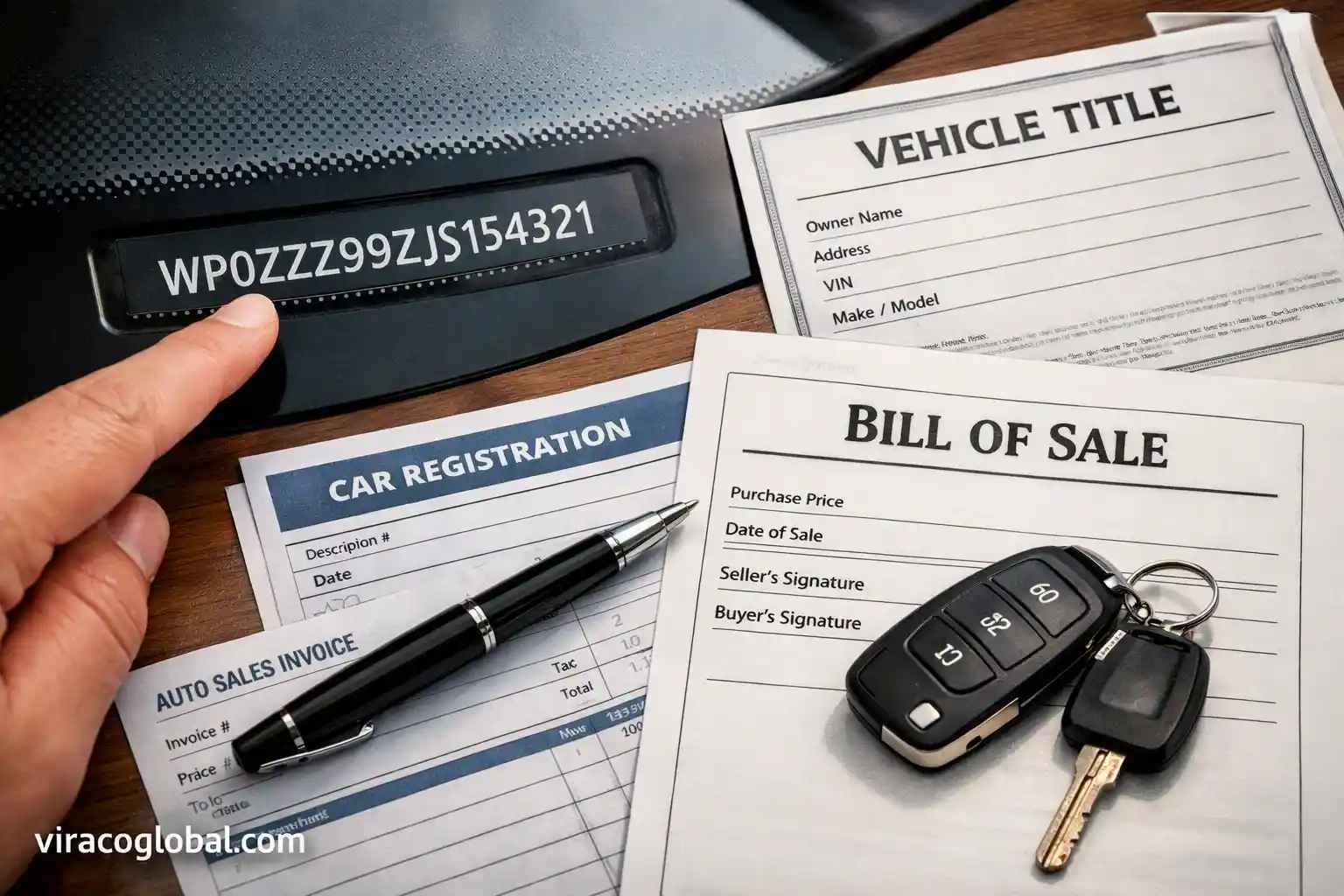
Depending on the vehicle and export procedure, relevant documents may include:
- Purchase invoice
- Vehicle registration documents
- Export certificate
- Vehicle identification number (VIN)
- Customs documents
- Certificate of origin, where applicable
- Technical and conformity documents
- Shipping documents
The VIN should be checked carefully against the vehicle and its documentation. The vehicle’s history, accident record, ownership status, and outstanding financial or legal obligations should also be investigated where possible.
Dubai’s vehicle-related procedures, for example, use documents such as electronic customs certificates and sale-and-purchase agreements in relevant transactions.
Step 4: Purchase the Vehicle and Complete UAE Export Procedures
Once the vehicle’s eligibility and documentation have been verified, the purchase can be completed.
The export process generally requires the vehicle to be properly documented for departure from the UAE. Depending on the seller and shipping arrangement, export documentation and customs formalities may be handled by the seller, an export company, or a customs broker.
The vehicle should not be shipped before the necessary export and Iranian import documentation has been checked.
Step 5: Complete the Required Import Registration in Iran
One of the key stages of importing a car from the UAE to Iran is completing the required import registration before the vehicle reaches the relevant customs process.
Import registration is not simply a formality. Under Iranian vehicle-import regulations, a vehicle cannot be brought into the country for customs clearance without following the applicable registration and authorization requirements. Earlier regulations also explicitly prohibited unloading a vehicle at customs without the required order registration.
However, the exact procedure can differ between import routes. For example, current regulations contain separate procedures for commercial imports and special schemes for Iranian residents abroad. Therefore, the importer should identify the correct route before arranging shipment.
Step 6: Arrange Currency and Financial Requirements
Depending on the import route, the importer may also need to meet specific currency-source and financial requirements.
For example, the current procedure for certain company imports of used vehicles requires an active commercial card and permits registration using specified currency sources. The applicable procedure also requires the currency type to comply with the relevant rules.
Because currency rules can differ between import schemes, this stage should be checked together with the order-registration requirements rather than treated as a universal procedure for every importer.
Step 7: Ship the Car from the UAE to Iran
After the required import and export procedures are completed, transportation from the UAE to Iran can be arranged.
For vehicles leaving the UAE, sea transportation is an important logistics option. The exact shipping method depends on the vehicle, port, shipping company, cargo arrangement, and final destination.
The shipping documents should match the vehicle’s actual specifications and VIN. Errors in the shipping documents can create delays during customs procedures.
Step 8: Enter the Iranian Customs Process
Once the vehicle arrives in Iran, the customs process begins.
At this stage, customs authorities review the vehicle and its documentation, determine the customs value and applicable duties, and verify that the vehicle meets the requirements of the relevant import route.
The importer or customs broker may need to provide documents such as:
- Commercial invoice
- Shipping documents
- Vehicle identification information
- Import registration documents
- Export documents
- Certificates and technical approvals
- Other documents requested by customs or the relevant authorities
A professional customs broker can help coordinate the documentation and reduce administrative errors.
Step 9: Pay Customs Duties and Other Import Costs
Importing a vehicle involves more than the purchase price in Dubai.
The final cost may include:
- Vehicle purchase price
- UAE export costs
- Shipping and insurance
- Customs duties
- Taxes and statutory charges
- Inspection and technical approval costs
- Customs clearance fees
- Registration and license-plate costs
- Brokerage and administrative expenses
Step 10: Complete Technical and Environmental Approvals
Before the vehicle can be fully registered, it must satisfy the applicable technical, safety, and environmental requirements.
Iranian vehicle-import regulations have included requirements related to safety standards, emissions, and conformity certificates. Depending on the vehicle and import route, documents from recognized standards systems may be relevant to the conformity assessment.
This is another reason why technical eligibility should be checked before purchasing the vehicle in the UAE, rather than waiting until the car reaches Iran.
Step 11: Customs Clearance
Once the required duties, approvals, and documentation have been completed, the vehicle can proceed through the final customs-clearance stage.
The customs broker or importer completes the required formalities, resolves any documentation issues, and obtains the documents necessary for the vehicle to leave customs.
The time required for clearance depends on documentation, inspections, approvals, workload, and the specific import procedure.

Step 12: Register the Vehicle and Obtain an Iranian National Plate
After customs clearance, the vehicle must go through the applicable registration and license-plate procedures.
The national-plate stage is important because customs clearance alone does not mean that the vehicle is ready for normal registration and use throughout the mainland.
The vehicle’s documents, identification information, technical approvals, and customs records must correspond correctly before the registration process can be completed.
Once the required procedures are successfully completed, the vehicle can receive its Iranian national license plate.
How Much Does It Cost to Import a Car from the UAE to Iran?
The total cost of importing a car from the UAE to Iran should be calculated as a complete landed cost rather than based only on the Dubai purchase price.
A practical calculation should consider:
Vehicle price + UAE export expenses + shipping + insurance + customs duties + taxes and statutory charges + inspection + clearance + registration + license-plate costs
The amount can vary significantly depending on the vehicle’s value, engine or powertrain, new or used status, applicable tariff, import route, shipping method, and exchange-rate conditions.
For this reason, comparing two cars only by their UAE purchase prices can give a misleading picture of their final cost in Iran.
Common Mistakes When Importing a Car from Dubai to Iran
Several mistakes can increase the final cost or even prevent the vehicle from completing the import process.
Buying Before Checking Eligibility: A vehicle may be available for sale in Dubai but still fail to meet the requirements of the intended Iranian import route.
Ignoring the Model Year: Used-car eligibility can be tied directly to the vehicle’s age and model year. Current 2026 rules for certain Article 11 procedures, for example, limit eligibility to vehicles more than three and less than five years old.
Focusing Only on the Purchase Price: Shipping, customs duties, taxes, inspection, clearance, and registration can significantly change the final price.
Incomplete Documentation: Differences between the VIN, invoice, export documents, shipping documents, and Iranian registration records can create delays.
Confusing Different Import Routes: Mainland commercial imports, special schemes for Iranians residing abroad, and free-zone procedures do not necessarily follow the same rules. Treating them as one process can lead to incorrect assumptions.
How to Reduce the Risk of Importing a Car from the UAE
A safer process begins before the vehicle is purchased.
First, verify that the specific vehicle is eligible under the intended Iranian import route. Then check the VIN and vehicle history, review all purchase and export documents, estimate the complete landed cost, and confirm the required registration and technical approvals.
It is also important to work with experienced professionals for customs clearance and international vehicle transportation, especially when the importer is dealing with documentation, currency requirements, technical approvals, and customs procedures at the same time.
The key principle is simple: do not purchase the vehicle first and check its import eligibility later.
Is Every Car Available in the UAE Eligible for Import to Iran?
No.
The fact that a vehicle is legally sold or registered in the UAE does not mean that it automatically qualifies for import and national-plate registration in Iran.
For a detailed overview of eligible vehicles, see our guide: [Which Cars Can Be Imported to Iran in 2026?]
Eligibility depends on the applicable regulations and may involve the vehicle’s model year, technical specifications, emissions, safety standards, brand, after-sales-service requirements, value, importer type, and the specific legal route used.
For this reason, a vehicle should be evaluated individually before purchase.
Why Professional Support Matters
Vehicle imports involve several stages that take place in different countries and under different regulatory systems.
A professional import and sourcing team can help coordinate vehicle selection, document verification, export procedures, shipping, customs clearance, technical approvals, and registration.
For businesses and individuals who want to reduce administrative risk, the most important value is often not simply finding a vehicle in Dubai, but making sure that the selected vehicle can successfully move through the entire process from purchase to Iranian national registration.
Conclusion
Importing a car from the UAE to Iran involves much more than purchasing a vehicle in Dubai and arranging transportation.
The process generally requires selecting an eligible vehicle, verifying its documents and import eligibility, completing the applicable registration requirements, arranging export and shipping, handling customs procedures and import costs, obtaining technical approvals, completing customs clearance, and finally registering the vehicle for an Iranian national plate.
Because Iranian vehicle-import regulations and specific import schemes can change, the requirements should always be verified before purchasing the vehicle. A careful eligibility check at the beginning can prevent significant financial and administrative problems later.
For businesses looking for a structured approach to sourcing and importing foreign vehicles, Viraco can support the process from vehicle selection and sourcing through the required import and logistics stages.
FAQ
No. The vehicle must meet the requirements of the applicable Iranian import route. Model year, technical specifications, standards, documentation, and other conditions may affect eligibility.
Certain used-car import procedures are available in 2026, but eligibility depends on the applicable legal route and conditions. For example, the current Article 11 procedure specifies a vehicle age of more than three and less than five years.
No. UAE registration and Iranian national-plate eligibility are separate matters. The vehicle must satisfy Iranian import and registration requirements.
Depending on the transaction, important documents can include the purchase invoice, vehicle registration records, export certificate, VIN information, customs documents, and shipping documents.
There is no single fixed additional cost. Shipping, customs duties, taxes, technical approvals, clearance, and registration can all contribute to the final landed cost.
Yes. Vehicle-import regulations, tariffs, eligibility requirements, and special import schemes can be amended. Therefore, the applicable rules should be checked before finalizing the purchase and shipment.